By Milo C'
Sigmund Freud argued that civilisation is built on repression. According to Freud, the structures built to liberate us become the very structures that constrain us. Latin American literature's greatest rebirth planted the seeds of its own discontent.
Magical Realism, the literary genre in which the extraordinary is normalised, emerged from an entire continent's cumulative way of seeing. The genre stems from indigenous mythology, African tradition, and the Catholic Baroque discernment of Latin American colonialism. It was first championed by the Cuban writer Alejo Carpentier in his 1949 novel El reino de este mundo. The novel was contextualised by Carpentier's belief that the New World's history was itself inherently miraculous. The magical realist movement matured with the arrival of Juan Rulfo's Pedro Páramo, and then detonated in the world's literary imagination under the auspices of Gabriel García Márquez's Cien años de soledad (1967) to such an extent that it became known as 'el boom'. Márquez's work ingeniously normalises levitation and bodily ascension, such as when Remedios the Beauty ascends to heaven whilst folding laundry, and around this, a new generation of Latin American literature flourished. Borges dismantled reality, and Fuentes forged Mexican identity from centuries of violence and volatility. Later, female writers such as Allende and Esquivel utilised magical realism inwardly, criticising the suppressed history of women and transforming magical realism from a continental mythology into an intimate political stance. Crucially, the radicalism of magical realism lay in its refusal of the European framework of reality and, in doing so, signified an era of rebirth for Latin America. What Freud may have predicted, however, is what came next.
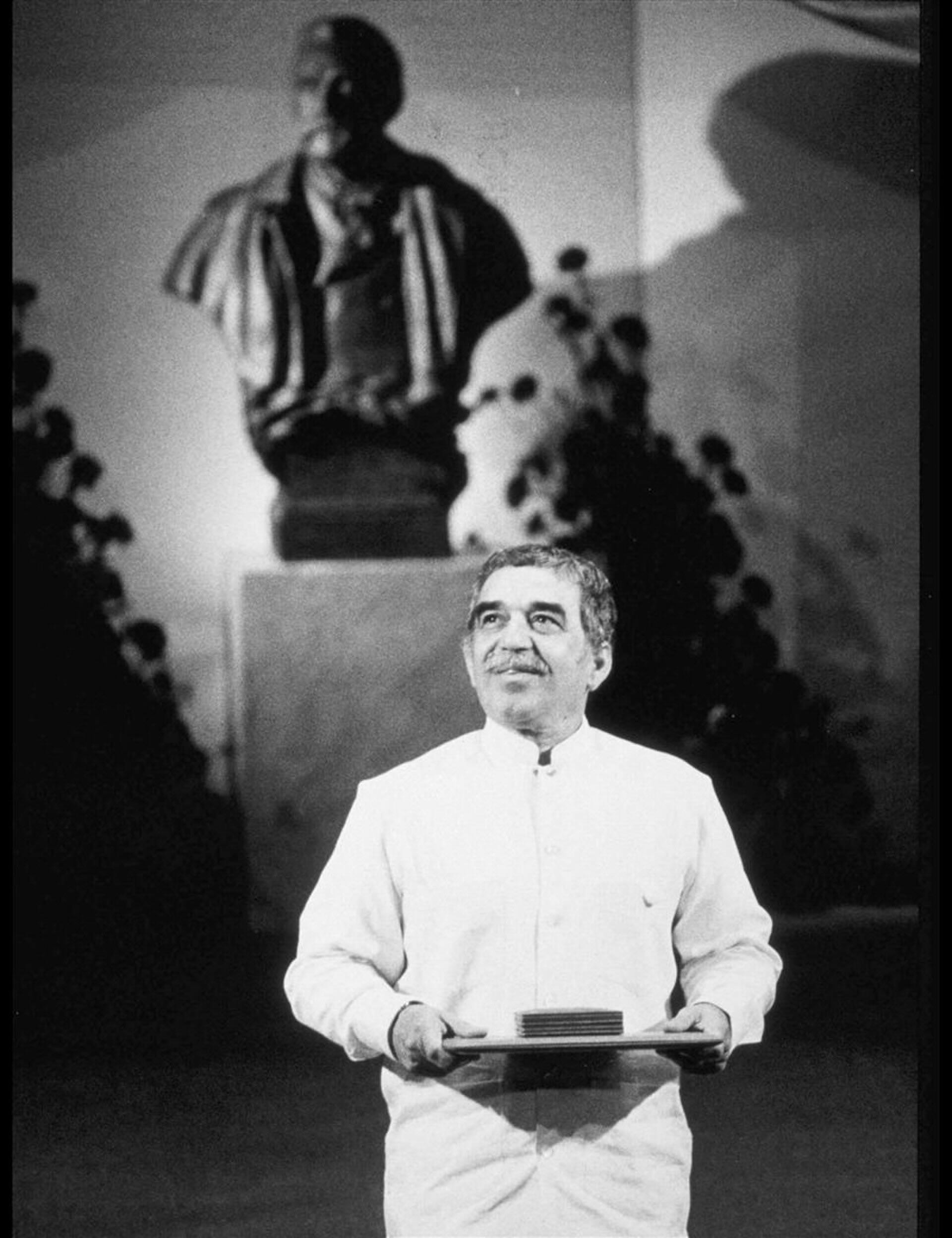
In 1982, Gabriel García Márquez won the Nobel Prize in Literature. For Latin America, this was a triumph, for it marked the ultimate blossoming of a new literary movement. However, it marked the moment when magical realism became institutionalised, as what had begun as a radical refusal by a post-colonial continent became a commercial formula. Across the West, publishers began treating it as the definitive Latin American style, flattening a continent of more than six hundred million people with centuries of diverse history and culture into a singular aesthetic. Not only was magical realism commercialised, but urban Latin American novelists, experimentalists, and realists were imprisoned, unable to access an international market that had already decided what Latin America was allowed to sound like. From inside Latin America, a Chilean writer labelled works of magical realism as "postcards for foreign consumption". He would later become magical realism's most ferocious and consequential critic.
Roberto Bolaño was a Chilean novelist and poet, exiled under Pinochet, and is known as the source of some of the most damning criticism of magical realism. His exile signifies the forging of his critique by lived political trauma. Bolaño did not just write differently from Márquez; he understood that, as Freud observed, and Herbert Marcuse would later sharpen into the concept of "repressive desublimation", a liberating force ultimately becomes the tool of the conformity it originally opposed. Magical realism had transformed from Latin America's source of rebirth to its most significant source of constraint. Bolaño addressed this in his 1999 speech upon receiving the prestigious Rómulo Gallegos Prize, describing literature as "basically a dangerous occupation." He believed literature requires genuine danger and risk. For Bolaño, magical realism had become comfortable and commercially predictable. In his book The Savage Detectives, time is fractured chronologically, as if it could collapse at any moment, whereas in Márquez's writing, time moves in circles and everything feels inevitable and eternal. Similarly, Márquez depicts Macondo as if it were timeless, or biblical, whilst in The Savage Detectives, Bolaño's depiction of life is relentlessly specific, real streets, real poverty, with characters who die anonymously in the same way that, as Bolaño would state in Caracas, "All of Latin America is sown with the bones of these forgotten youths". Bolaño describes his entire body of work as "a love letter or a letter of farewell" to his generation. Depicting magical realism's mythic serenity not as liberation, but rather erasure. Bolaño's second rebirth represented literature that directly engaged with what magical realism had aestheticised as myth, for he understood that the most dangerous prisons are those once built for freedom.

Yet, to support Bolaño's rebellion entirely is to risk the repetition of the very mistake he criticised in others. Did Bolaño's repudiation of magical realism discard something genuinely radical? The global migration of magical realism liberated writers, with Toni Morrison using it to confront the trauma and legacy of American slavery, and Salman Rushdie to address the trauma of post-colonial history, neither performing exoticism motivated by Western consumption, but in search of imperative political truth. The style that formed a prison for Latin American literature became a key to liberation for everyone else. This complicates the villain's true identity in this story. Bolaño himself may now be what Márquez was to his generation. Contemporary Latin American writers such as Samanta Schweblin are struggling against Bolaño's shadow, just as Bolaño grappled with Márquez's. For Bolaño's drive for urban realism, once seen as a revolutionary style of thought, has in turn become the norm against which a new generation must write. Here we can see the logic of Freud's Civilisation and Its Discontents complete itself, whereby the prison rebuilds itself with every generation. However, the true question is not whether Márquez or Bolaño is the villain or hero of Latin American literature. But rather, whether the cycle of rebirth and constraint is the sign of a failure of literary culture or clear proof that literature is alive.
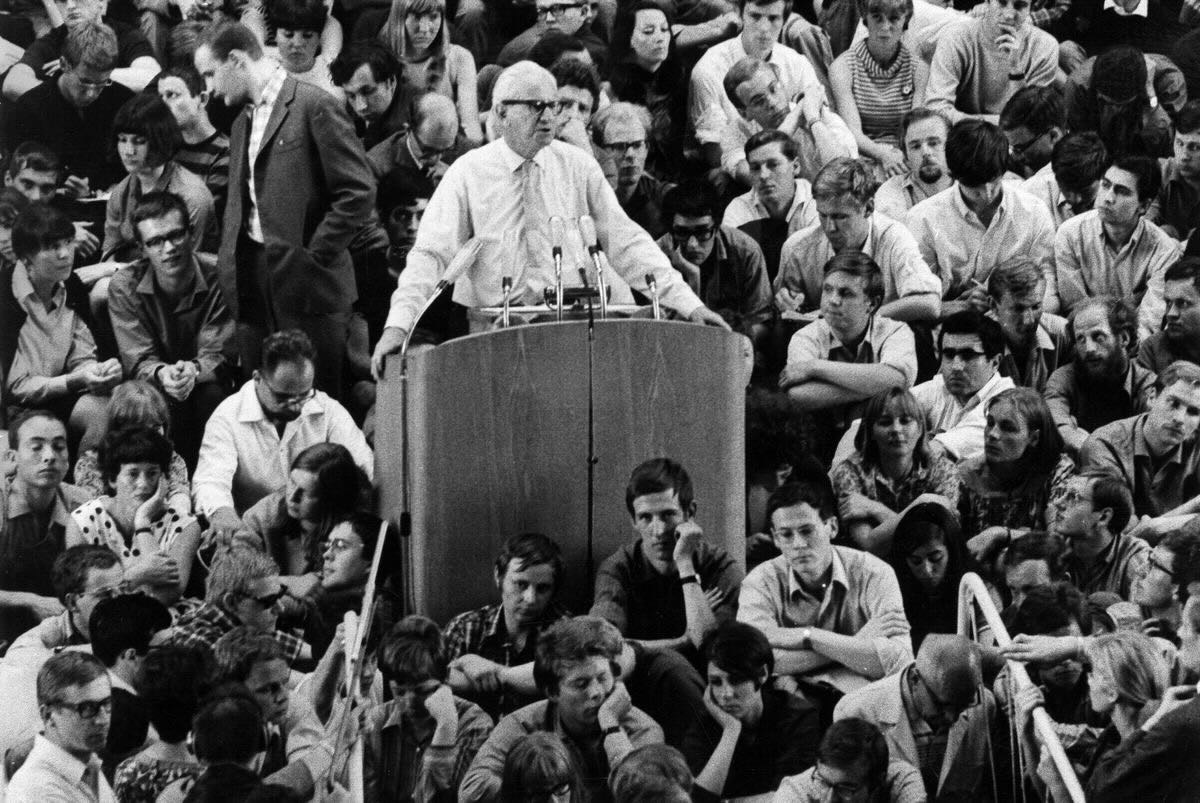
Freud, and later Marcuse, warned that what is built to liberate eventually becomes what will constrain and the story of magical realism illustrates this with disturbing accuracy. Gabriel García Márquez rekindled Latin America's imagination and Bolaño extinguished the flame to prove it could burn again. Yet both acts were requisite and inevitable. Perhaps this is what Freud believed, and, unsettlingly, Márquez and Bolaño both demonstrate. That literature must be prepared to abandon its own certainties to truly be reborn.
Bibliography
Bolaño, Roberto. Los detectives salvajes. Barcelona: Editorial Anagrama, 1998.
Bolaño, Roberto. “Discurso de Caracas.” Speech delivered upon acceptance of the Rómulo Gallegos Prize, Caracas, Venezuela, August 2, 1999.
Carpentier, Alejo. El reino de este mundo. Havana: Edición y Distribución Iberoamericana de Publicaciones, 1949.
Freud, Sigmund. Das Unbehagen in der Kultur. Vienna: Internationaler Psychoanalytischer Verlag, 1930. Translated by James Strachey as Civilization and Its Discontents.
García Márquez, Gabriel. Cien años de soledad. Buenos Aires: Editorial Sudamericana, 1967.
Marcuse, Herbert. Eros and Civilization: A Philosophical Inquiry into Freud.
Marcuse, Herbert. One-Dimensional Man: Studies in the Ideology of Advanced Industrial Society, 1964.
Rulfo, Juan. Pedro Páramo. Mexico City: Fondo de Cultura Económica, 1955.