By Frederick H'
A widely known fact on China is that for many centuries, it has boasted the largest population in the world - 1.42 billion people in 2021[1]. In recent decades, China’s emergence as an economic and industrial powerhouse on a global scale, has been enabled by the backbone of a massive young mobile workforce. The story of modern
China may be analysed and reflected in the ability of this massive young workforce to power China’s growth.
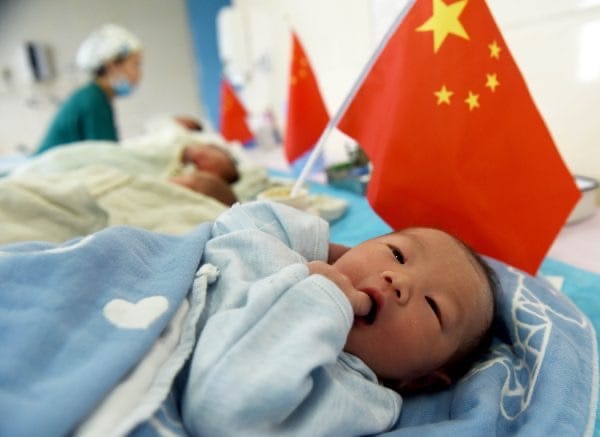
However, many people are not aware that China’s population is changing- and rapidly; the population is shrinking and ageing at a faster rate than almost any other country. In 2014, the birthrate in China was ~18 million [2], yet in 2025, this number had plummeted to a birthrate of 7.9 million [3]. In comparison, India’s birthrate in 2023 was 23 million [4]. In 2022, China’s population dropped for the first time [5], and in 2023, India surpassed China as the world’s most populous nation [6]. China is now facing a massive demographic challenge on two fronts- the decline in the birth rate, combined with the ageing of the population. The President Xi Jin ping alluded to this in his statement that China faces “the pressure of a large population and the challenges brought about by the transformation of the population structure” [7].
This begs the question – why is China facing such a rapidly declining birthrate? This can be explained by a few key reasons, most notably, the One Child Policy. Under the leadership of Mao Zedong, the Chinese Communist Party (CCP) aimed to transform China from a poor, agricultural society into a powerful socialist state through rapid industrialisation- the Great leap forward (1958-1962). After the Great Leap forward, birth rates peaked at 40/1000 people in the mid 1960s [8], leading to a profound fear of overpopulation and famine. The government subsequently adopted population control in the 1970s. These policies involved a number of measures. The 晚稀少 (Later, Longer, Fewer) campaign of 1973 raised the legal age of marriage, and limited births to two children, with 3 years between births. This was followed up with the 独⽣⼦⼥政策 (One Child Policy), launched nationwide in 1980 [9]. This strictly limited all families to one child only and has had profound long-term implications on the demographics of China and has led to demographic contraction. By the 1990s, China’s fertility rate was 1.5 births, by 2020 it fell to 1.3 births per female, and in 2024 that number was 1.0. This is one of the lowest birth rates in the world [10] and far below the population replacement level needed of 2.1.
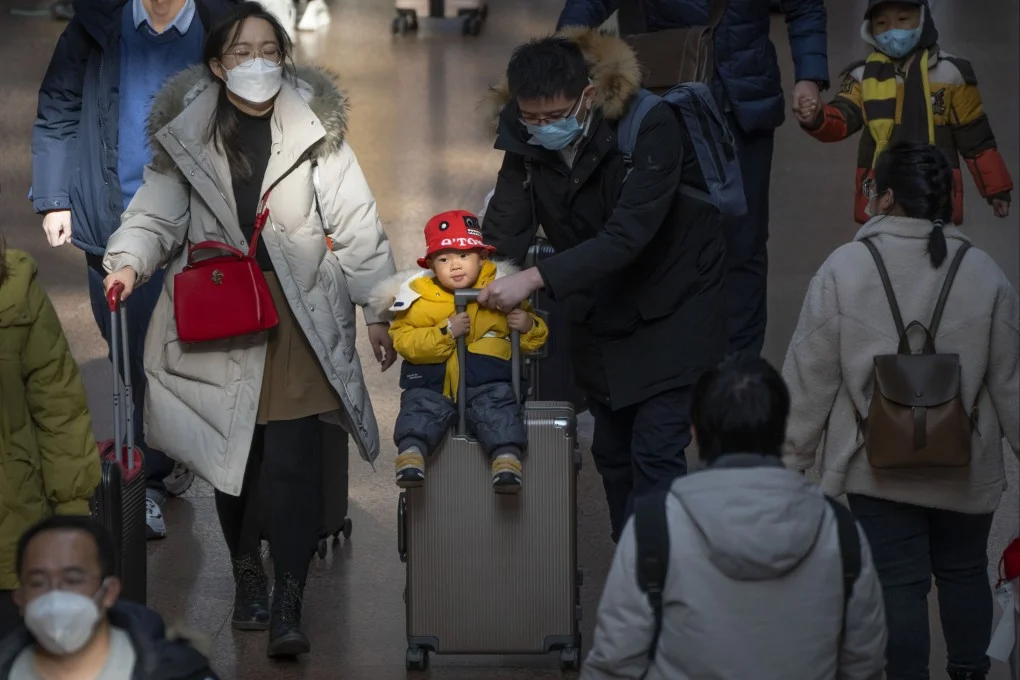
Another critical factor in the decline of the birth rate is the gender imbalance in China. Due to a cultural preference for sons and the restrictions of the One-Child Policy, sex-selective practices led to an unbalanced male to female birth ratio. At its peak, there were approximately 117 boys born for every 100 girls. This has resulted in tens of millions of “surplus men,” as demonstrated in the graph above. Many of these men are unable to find partners and start families. The demographic consequences of this imbalance are long reaching. Not only does it reduce the number of potential partnerships, but it may also contribute to long-term social instability. Estimates suggest that between 2020 and 2050, China could have up to 50 million more men than women of marriageable age [11], significantly limiting future population growth.
Furthermore, The Chinese concept of “卷” (rat race) is also contributing to a decreasing birth rate. This concept describes an ultra-competitive society where an individual must work increasingly hard for diminishing returns. Young people face intense pressure from their family to succeed academically and professionally, often working long hours, otherwise known as 996 (a colloquial term for 9am to 9pm, 6 days a week). Another term for this hard work culture is “牛马精神”(“Workhorse mentality”), this term implies that people are being treated like labouring animals, suggesting the labour market is exploitive, burns people out, and doesn’t give them a choice. In response to this ever increasing competition, a growing number of young Chinese people have adopted the mindset of “躺平”(“lying flat”). This is when an individual decides to give up on traditional life goals such as career advancement, home ownership, marriage, and childbearing, believing these goals are essentially unattainable for them. This shift, “躺平”(lying flat), represents a major cultural transformation away from the traditional values of family and hard work, and may also lead to more fundamental societal changes prioritising individualistic lifestyles. This will lead to fewer new couples and ultimately become another major contributor to China’s declining birth rate.
In conclusion, this demographic challenge is likely the result of complex interactions of historical policy decisions, economic pressures, and social change. The legacy of the One-Child Policy, combined with rising intense social competition (the concept of “卷”) has led to a sustained drop in the fertility rate which doesn’t seem to be rising any time soon.
China’s demographic change represents one of the most significant challenges to its future development. China must adapt to a future defined not by its population growth, but by its population decline. This demographic transformation will shape not only China’s own future, but also that of the global economy.
Bibliography
[1] https://data.worldbank.org/indicator/SP.POP.TOTL?loc
ations=CN
[2] https://www.unicef.cn/en/media/28801/file/Children%2
0in%20China:%20An%20Atlas%20of%20Social%20In
dicators%202024.pdf
[3] https://www.theguardian.com/world/2026/jan/19/china-
population-falls-again-birthrate-record-low
[4] https://ourworldindata.org/grapher/births-and-deaths-
projected-to-
2100?country=~IND&time=1950..2023&tab=line
[5] https://www.youngpostclub.com/yp/discover/news/asia/
article/3248706/chinas-population-falls-second-
consecutive-year-2023-annual-birth-rate-hits-record-
low-deaths-rise
[6] https://desapublications.un.org/policy-briefs/un-desa-
policy-brief-no-153-india-overtakes-china-worlds-most-
populous-country
[7] https://chinapower.csis.org/china-demographics-
challenges/
[8] https://en.wikipedia.org/wiki/Demographics_of_China
[9] https://www.britannica.com/topic/one-child-policy
[10] https://www.visualcapitalist.com/charted-sinking-
fertility-rates-in-the-worlds-10-largest-countries/
[11] https://www.news.com.au/lifestyle/real-life/news-
life/crisis-chinas-leftover-men-drive-sick-trend-
online/news-
story/b25d35ad7a10bbd56bfa29456824ace3