By Taro S'
When we think of the historical far right, you may think of Hitler’s Nationalist Socialist German Workers’ Party or Mussolini’s Republican Fascist Party that controlled much of the European continent during WW2. However, Japanese far-right policies may be forgotten by much of the English-speaking population due to the regime’s failure to establish total authoritarianism, as the Zaibatsu (large corporations) retained most of the economic power, and there was no centralized party, even in World War II, that dominated all of its government. But what did life within Japan look like? How dangerous were its beliefs?
Education in far-right Japan
Within Imperial Japan, the educational policies were designed to prepare future Japanese adults to be functioning members of its empire. Within the school, Children were known to pledge loyalty to the imperial family; one quote from the period states, “The way of the subject is to serve the emperor with the whole heart.” Not only that, but school textbooks also taught death by fighting as honorable, while also teaching children that Asia had to be conquered under the rule of the Japanese population for all of its people. Specifically, during WW2, students would be taught that Japan had a duty to counter Western colonialism and act as the “big brother” of the “less developed nations”.
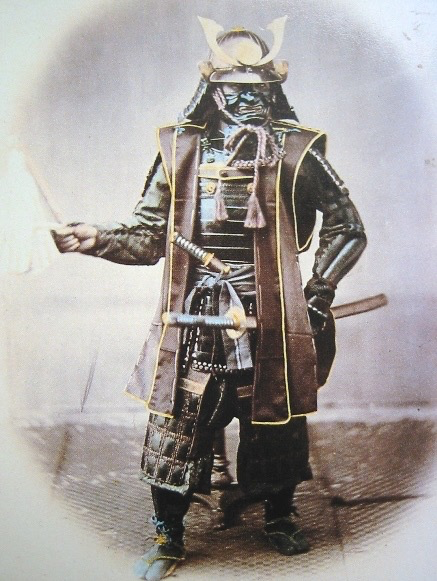
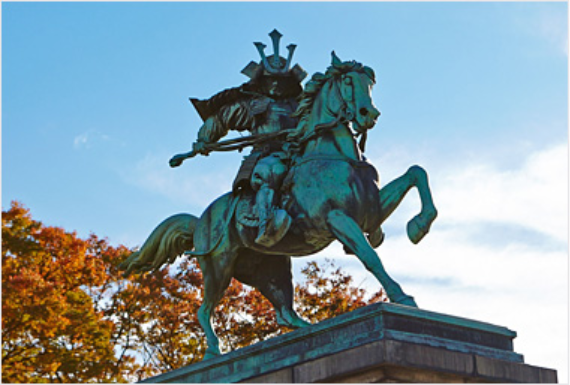
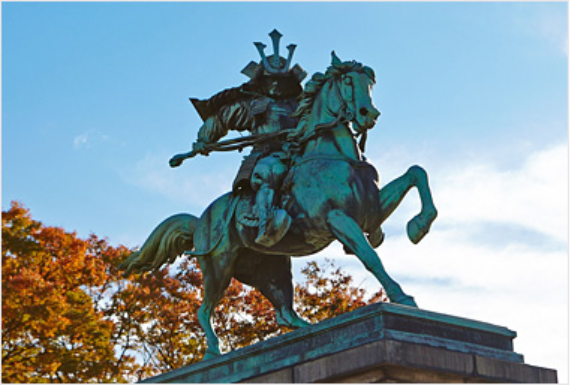
Beyond teaching its core beliefs, the imperial government further pushed on this message through specific means in education. For example, history was taught in such a way that it glorified the Japanese population. Divine protection of Japan through the gods was taught within the curriculum, as much of the Japanese population believed the miraculous storms that occurred twice in a row that repelled the Mongolian invading forces and caused casualties of 13,000 Mongolians, as evidence that Japan was unique. Furthermore, historical samurais such as Kusunoki Masashige, known for his death protecting the emperor while proclaiming that he had wished he had seven lives to sacrifice for his country and the emperor, were glorified within the textbooks for daily use; this allowed the government to further imprint nationalistic beliefs within its young.
For female students, the government expected them to be devoted wives and mothers who served the future of Japan. This was specifically achieved through educating female students only on sewing, cooking, cleaning, or childcare, forcing them to fit into a misogynistic mold that expected frugality, modesty, and sacrifice. Additionally, women were expected to join a group by the name of the Patriotic Women’s Association, which released nationalist political papers such as the “Nippon Fujin” (often compared to the Nazi Publication Frauen Warte by historians such as Andrea Germer)
Propaganda and censorship
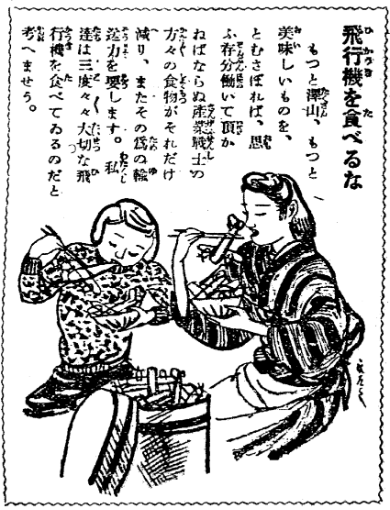
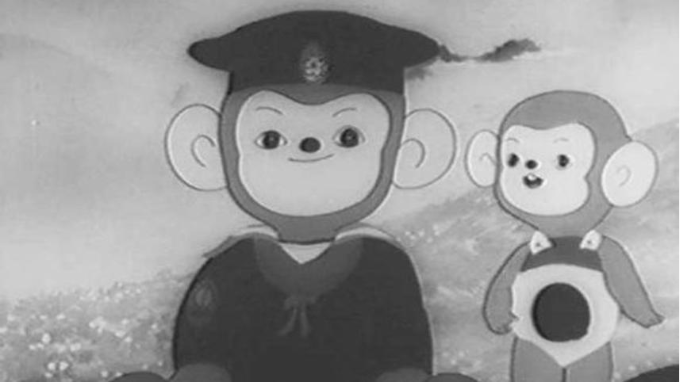
Beyond education, Propaganda was present for all of the Japanese people to see. Films and animations were commonly utilized to spread patriotism around the country. Animation was particularly popular at the time, as different series such as “Momotaro’s divine sea sailors” would frame soldiers as heroic while also adopting famous folklore; within the film, Momotaro (the protagonist of the film) would invade Sulawesi (an island in Indonesia) and defeat the British in order to improve both morale and patriotism within the country. Beyond film, the Japanese government limited free speech, while also playing the emperor’s voice through the national broadcast system (the NHK).
The Japanese Secret Police
When thinking of authoritative police groups, groups such as the NKVD or Gestapo may come into mind, yet Japan had its own secret police, the “Tokko”, known for silencing any opposition. Its main targets included any “kiken shisou”, or dangerous thought; this included liberalist, communist, Christian, and socialist thought, or any other thought that challenged the absolute authority of the state. It was known to be especially harsh toward socialism/communism, as the right wing felt threatened by left-wing takeovers after a communist student’s attempt on the then-crown prince Hirohito’s life. By 1925, much like the Nazi law for the “protection of the people and state”, the Tokko were legally able to detain and torture those suspected of an enemies of the state. This led to widespread fear, leading primary sources at the time citing the reduction in political conversations as well as the increased “tonarigumi” system that let neighbors report on each other. However, while it was effective in establishing widespread fear, it is documented that ,in comparison to other secret police groups within totalitarian regimes, it had limited power, as it had limited resources and power of the judiciary: its membership was 1/3 of the Gestapo at around ten-thousand, while it was also limited in its power to execute citizens after detaining them as the courts would decide their fate.
Religion
Within imperial Japan, despite the years of religious syncretism between Shinto and Buddhism, Shinto was chosen as the official state religion. In many ways, Japan was one of the only authoritarian regimes to successfully link religion with the regime itself. Shinto established both the unique power of the Japanese people and the emperor; on one hand, the Japanese island itself was considered sacred as the islands were created by the Gods themselves within the “Kojiki”, a mythological Shinto document that recants the creation of Japan. Furthermore, the emperor was known as the direct descendant of the sun God, Amaterasu, further establishing the divine nature of the imperial family.
Beyond Shinto, however, Buddhism also had an influence on imperial Japan. Buddhism was under strict watch as to not threaten Shintoism and support the state. Despite Buddhist teachings of Metta (loving-kindness) and Karuna (compassion), some Buddhists within Japan supported both imperial expansion and the war effort. Namely, some Buddhists specifically quoted Buddhist teachings that encourage non-attachment to conditioned objects and organisms as a reason for the permissibility of killing any Japanese enemies. Furthermore, many Buddhists directly taught the importance of the war effort, as one Zen master-Harada Daiun Sogaku, is quoted as saying, “If ordered to march: tramp, tramp, or shoot: bang, bang. This is the manifestation of the highest Wisdom [of Enlightenment].”
When we place Japan during and prior to WW2, along with Nazi Germany or Fascist Italy, it becomes clearer that its specifics operated differently. It was not one group that totally dominated the country, but rather a mix of the military, the emperor, and the government that allowed itself to penetrate to Japanese education, religion or beliefs. Despite its absence of a terror machine such as the USSR’s NKVD, children in Japan were either molded to become the ideal soldier or mother, while citizens still feared the Tokko, which may have been unable to put them to death, but could certainly ruin their lives.