By Freddie D'
If you think of Berlin, what comes to mind? A concrete jungle, the capital of Germany, techno music? Sure, those are parts of Berlin, but you really must go there to see, and more so to feel, what Berlin is really like. It is, in its very nature, disorganised, having been divided for 40 years between East and West, Communism and Capitalism, Honecker and Brandt.
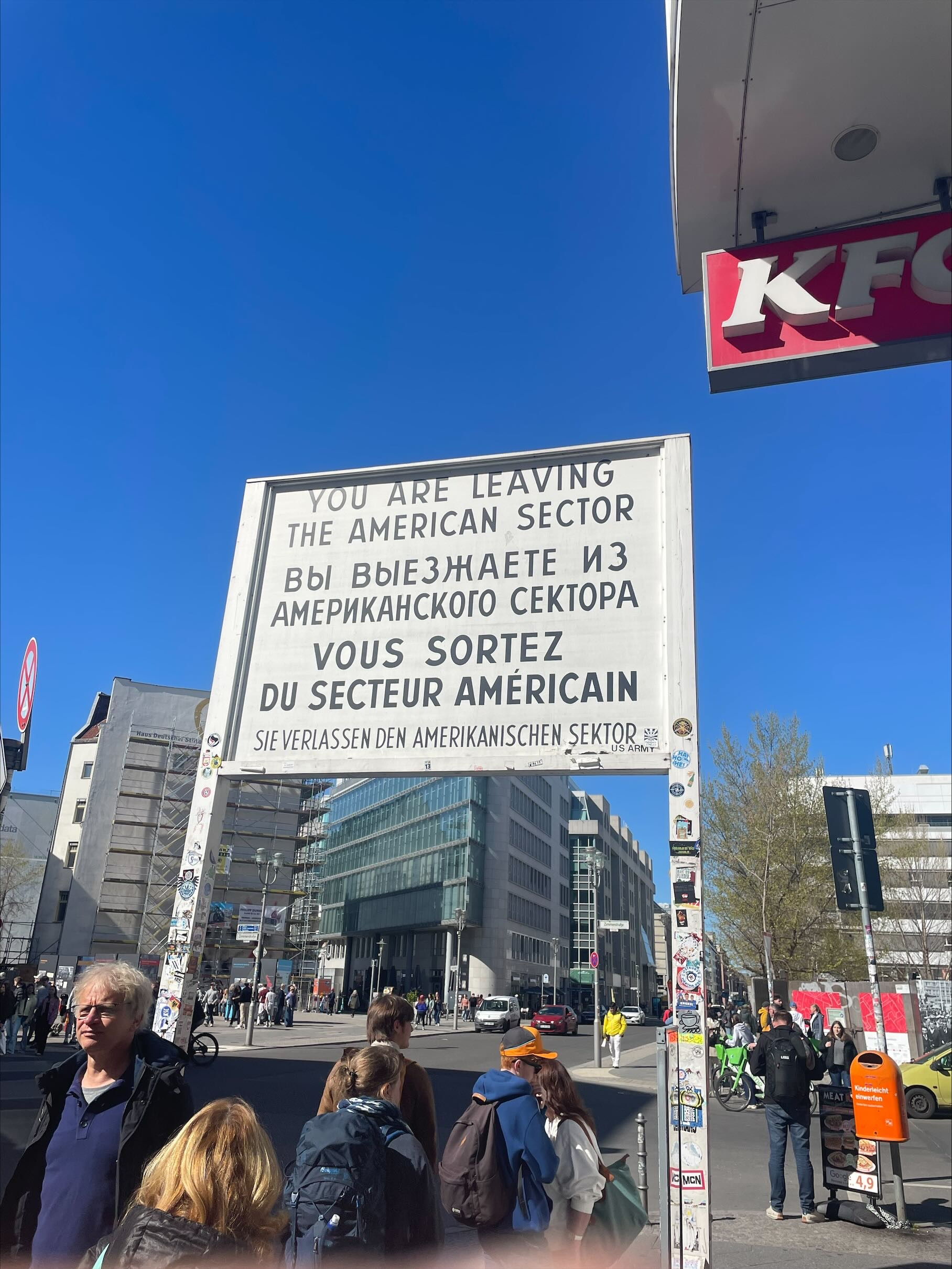
In Berlin, you can be at Checkpoint Charlie, the former border gate on the Wall, in the former American sector, and then, after a block of walking, be at the Topography of Terror, the site of the former SS main office, with a museum built there to commemorate the Holocaust and the actions of the SS. Another few blocks gets you to Potsdamer Platz, a great shopping area; then to the Brandenburg Gate and the Neo-Renaissance Reichstag Building, all while following the former Wall, now just marked by bricks on the ground. Along the way, one can also see the Trabbi Museum, the Nazi-era Detlev Rohwedder House, the Holocaust Memorial, and a part of the Wall still standing.
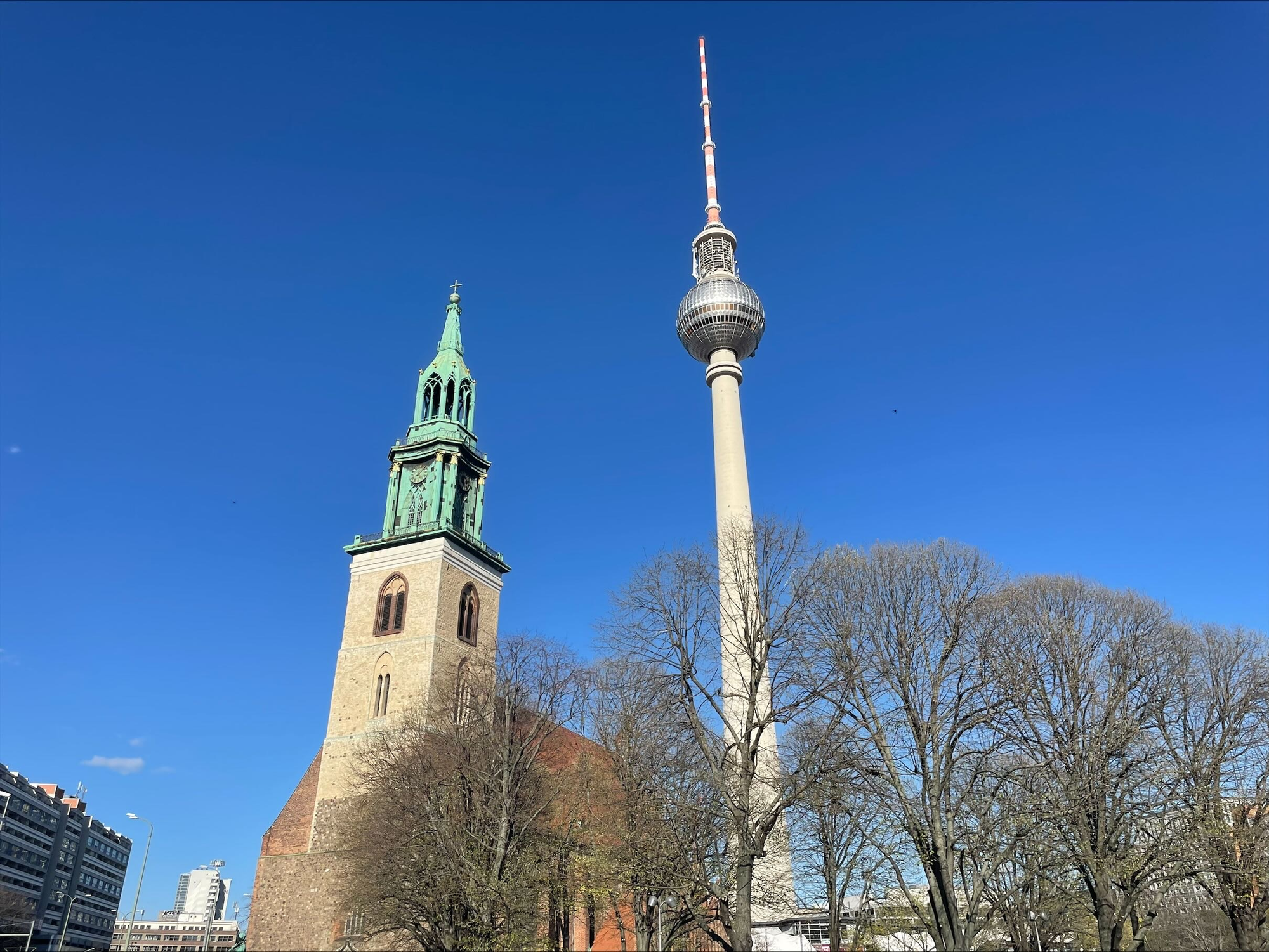
I was not around before 1989, but it is clear to see how the city has been reborn since, and in large part because of the Mauerfall. There are still the wide Soviet-style streets, which harken back to the former Eastern Bloc days, and who could forget the TV Tower, still dominating the skyline (and serving as a useful landmark). Yet the city could hardly be recognised as anything other than its own thing. I sometimes struggled to figure out whether I was in the former East or West; my hotel was in the East, and to go to the nearest underground station, I had to cross the former border. They are now the same city, but they are not the same.
If you do happen to visit Berlin, you will not be disappointed. There is so much to see that just a day would not do it justice. I alone spent the better half of a day around Museum Island, an island which lives up to its name. The scale is incredible, and the pictures do not do justice to the neoclassical and neo-Renaissance buildings. Anyone under 18 also gets to go into all the museums for free, all 5 of them, though the Pergamon Museum is currently closed for renovations, with a partial reopening happening in Spring 2027. As a student tight on cash (and in Germany they do still use physical currency everywhere), this was a luxury.
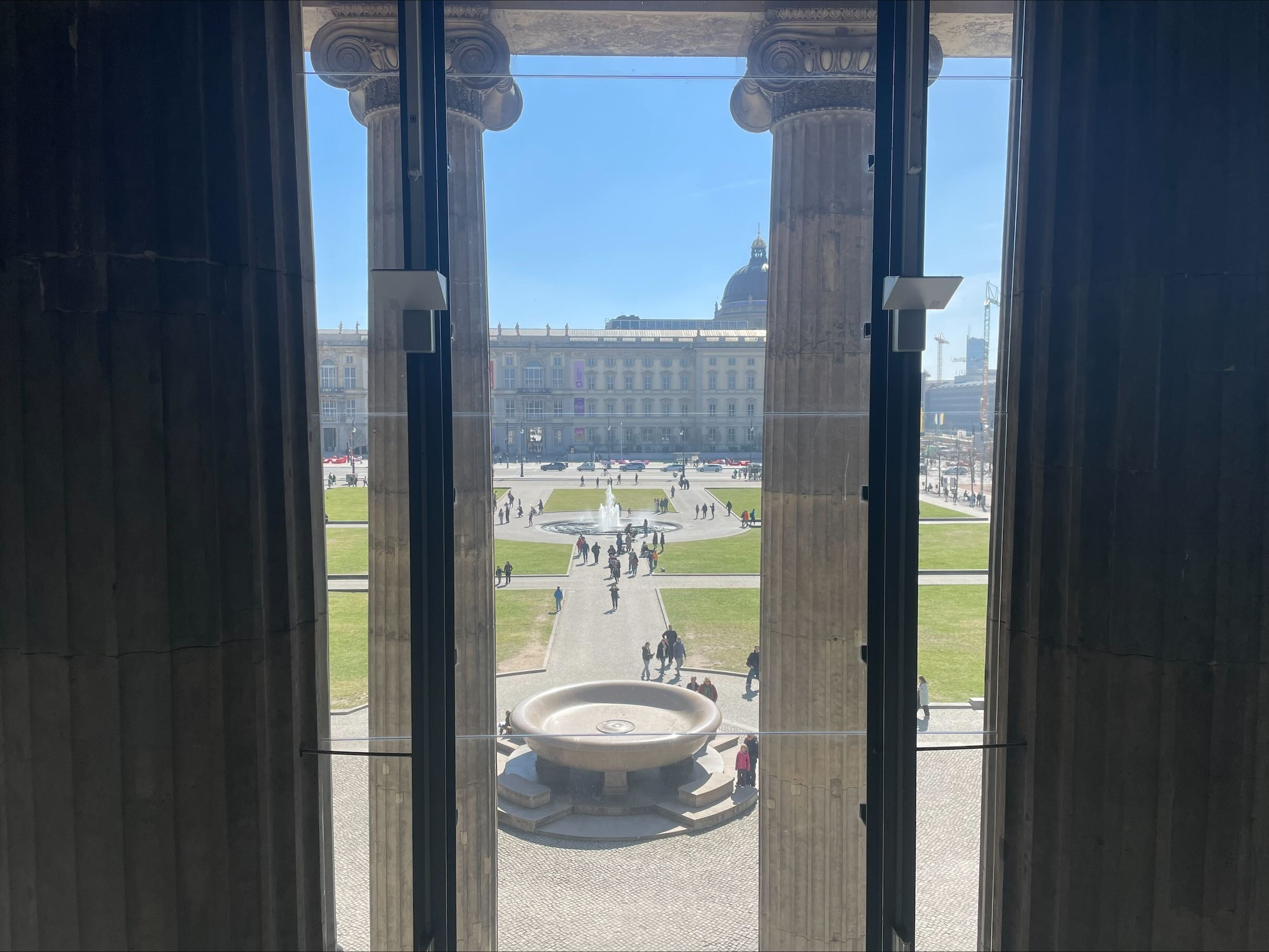
Berlin is a terrific city. I would like to go back at some point in the future to soak up some more of the rowdier parts of the city. I would recommend looking around Kreuzberg and Friedrichshain if that’s your goal. All the famous techno clubs are around there, along with some great bars and pubs. The beer in Berlin is definitely German, though I would say that other places in Germany do it better. Döner shops are everywhere, alongside Currywurst — a Berlin special.
The city also has terrific collections of art. The East Side Gallery is very well known, but there are also galleries such as the Old National Gallery, which is a part of Museum Island. You can see a real mix in Berlin. As previously stated, the architecture is also very mixed; the centre was very different from what I had imagined — it is not solely a concrete jungle.